
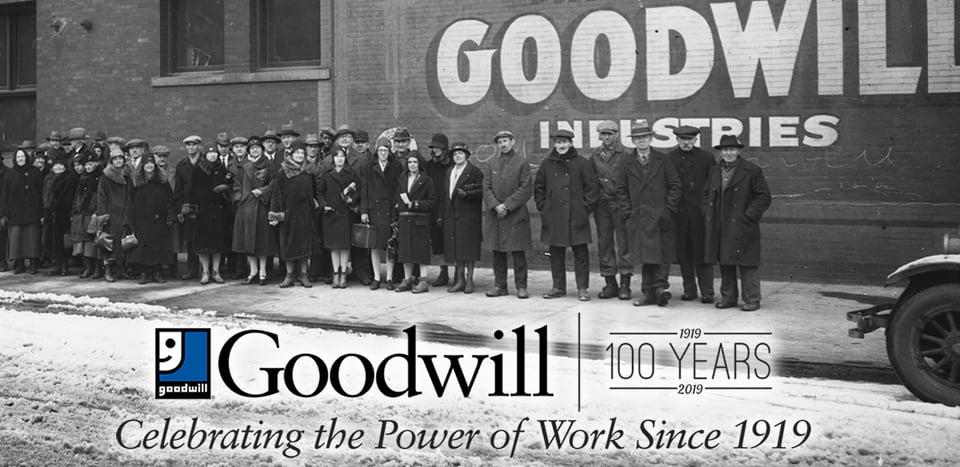
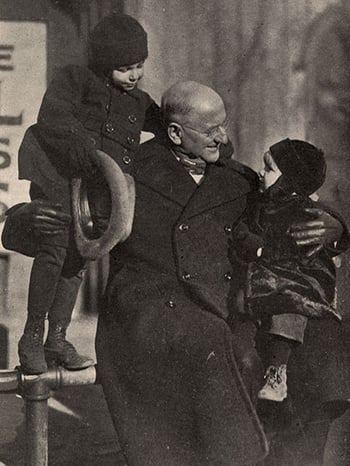
 Goodwill Industries began in Boston at the turn of the 19th century as an idea by the Rev. Edgar J. Helms. The idea was simple, fight poverty not with charity, but with trade skills—and provide a chance for the poor and the unemployed to do productive work. In the 1890s, there were no government programs to aid those in need. Determined to provide a hand up, not a hand out, Helms put a burlap bag over his shoulder and went door-to-door, appealing to well-to-do people of Boston to contribute shoes, clothing, furniture, anything. Poor men and women were put to work restoring collected goods while learning trades and sharpening skills at the same time. Income from the resale of the goods paid their wages and eventually an industrial school developed.
With Helms as the driving force, Goodwill Industries spread throughout the United States and by October 1919, that movement began in Milwaukee.
Our Goodwill was born on the east side at Summerfield Methodist Church. The work opportunities provided in those early years gave dignity, independence and hope to the people with disabilities that we served.
In the last 100 years, our services have changed to respond to the needs of the times. We began by helping people with disabilities and disadvantages repair donated items. We helped connect our neighbors with basic services during the Great Depression and were proud to provide training and jobs to wounded soldiers coming back from World War II. We trained people on computers when technology became part of the American workforce, and during recessions we have been instrumental in connecting people to jobs.
Although our services have changed, our belief in the Power of Work has remained the same.
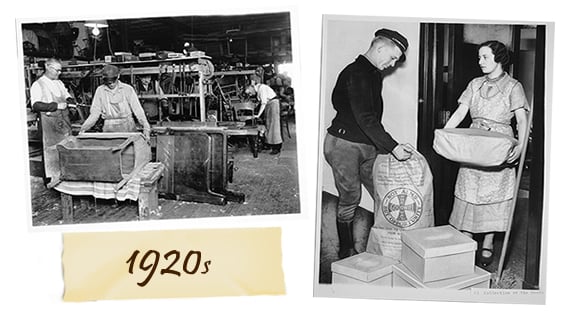
Late 1910s - 1920s
The Milwaukee Goodwill was incorporated on October 6, 1919, with the headquarters located at the Summerfield Methodist Church on East Park Place. Our mission then was "to provide a chance, not charity," to people society had labeled as unemployable, including thousands of soldiers returning from World War I. We responded by creating employment opportunities for veterans with disabilities as well as older workers displaced by the return of younger individuals.
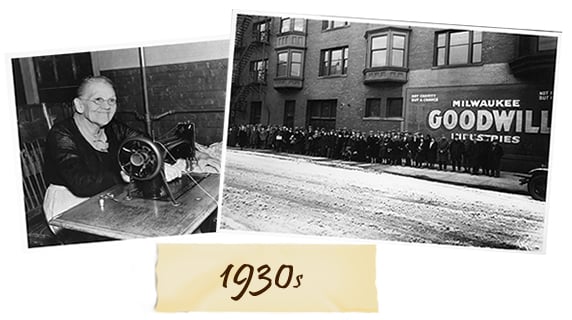
1930s
The Great Depression of the 1930s caused unemployment rates of 25 percent in Milwaukee County. Goodwill's innovation led to a cooperative effort with the Red Cross to distribute food and clothing to 30,000 needy Milwaukee families. We also served as a temporary employer of hundreds, enabling men and women to provide for their families.
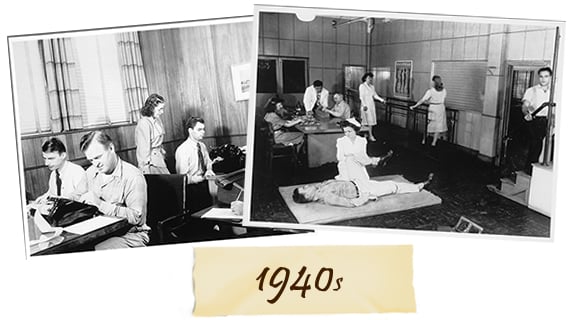
1940s
During World War II, Goodwill focused on the growing number of persons with physical disabilities and developed the internationally acclaimed "case management" model that extends personalized service to program participants.
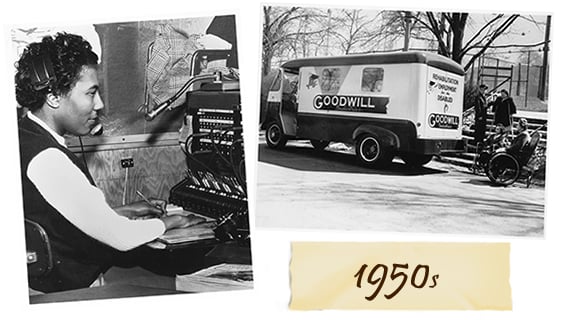
1950s
Goodwill increased our collaboration with local agencies, expanding services through Jewish Vocational Services and Curative Workshop, to provide on-site psychiatric, occupational and physical therapy services.
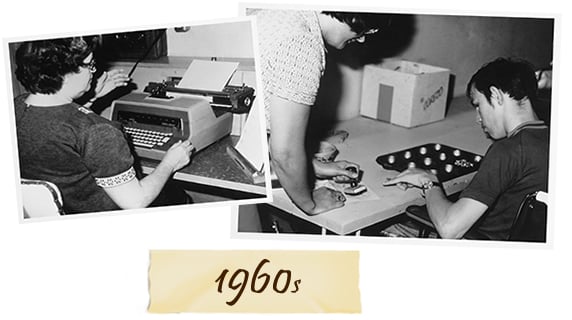
1960s
In the early ‘60s, the Goodwill movement expanded in Wisconsin and other sister organizations were formed in Racine, the Fox Valley and Madison, Wisconsin. To respond to the growth in services, a state-of-the-art rehabilitation center was built on the northwest side of Milwaukee. At the time, this facility was the largest freestanding Goodwill building in the nation. Individuals were referred for services from throughout Wisconsin as well as surrounding states.
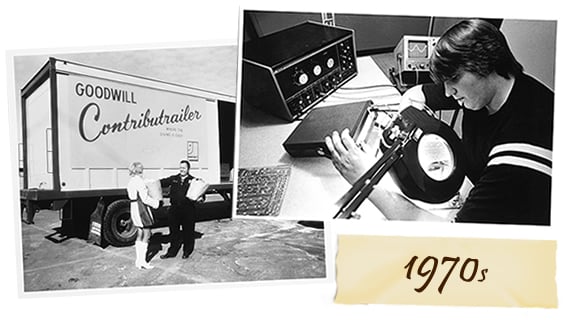
1970s
Goodwill created innovative programs, establishing neighborhood campuses to provide work experience and support services for individuals with disabilities. Our laundry services launched in 1974, serving Naval Station Great Lakes and beginning a long-standing relationship with the Navy. John L. Miller hired as Director of Professional Services.
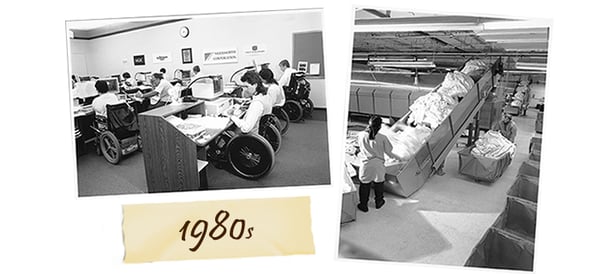
1980s
Ten additional centers were established for adults and seniors with developmental disabilities, building on the success of community-based services. Contributing to that effort, Portal Industries, a rehabilitation facility in Ozaukee County, became a Goodwill affiliate in 1986. John L. Miller promoted to President in 1982 and by 1986 Goodwill Industries of Southeastern Wisconsin has become the largest Goodwill organization in North America.
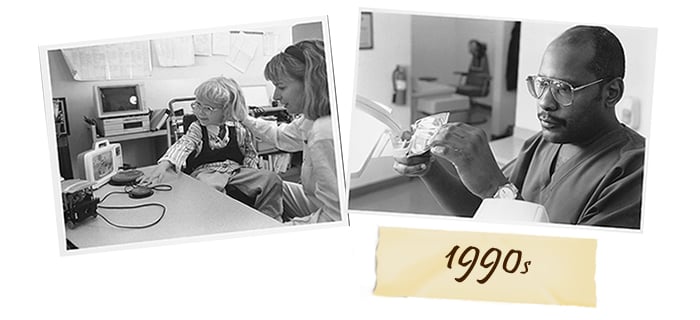
1990s
Goodwill identified a growing need for workforce development. The changing urban communities in which we operated prompted us to help launch job centers in Kenosha and Milwaukee Counties.
In 1998, we were awarded the largest food service contract under the Javits-Wagner-O’Day (JWOD) Program (now AbilityOne) for the Navy at Naval Station Great Lakes.
In 1999, the Goodwill organizations in southeastern Wisconsin and metropolitan Chicago merged. The primary goals of the merger were to increase the number of people served by Goodwill, unify the Goodwill brand throughout the Chicago-Milwaukee corridor and create growth opportunities within the marketplace.
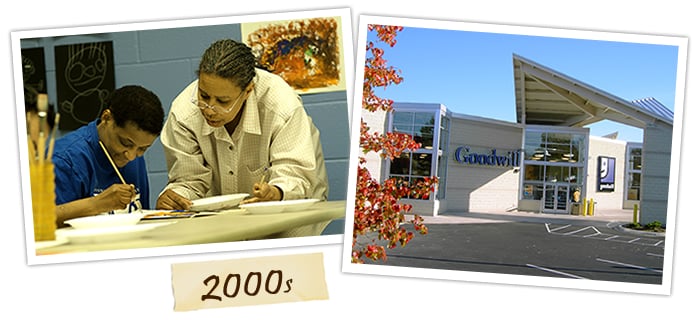
2000s
Our expansion continued into the next decade with the completion of several major building projects such as the Community Service Center in Waukesha, Wisconsin and many new modern Goodwill Store & Donation Centers. This decade saw the rebranding of Goodwill Store & Donation Centers, positioning them as mainstream retail outlets and attracting a new and expanded customer base.
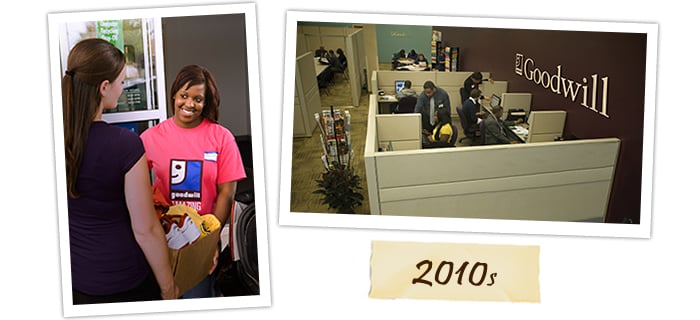
2010s
Despite economic uncertainty and high unemployment, Goodwill built program capacity and increased its service levels throughout its territory. This was accomplished by opening several new Goodwill Workforce Connection Centers in Wisconsin and Illinois, to provide free resources and job-search assistance to anyone who comes to us for help. To assist with the growing number of dislocated workers and employers looking for quality staff, Goodwill started its own staffing company called Goodwill TalentBridge. Partnerships with businesses continue to increase as we work to link employers with employees and grow awareness of our social enterprises that can help businesses in a variety of ways from document destruction and commercial laundry to packaging and assembly and staffing services.
We have over 60 Goodwill Store & Donation Centers and they continue to generate funds to help support our mission and employ more people. In addition to our Goodwill Manufacturing facility that operated in Milwaukee, WI we now have a new and improved 156,000 square foot facility in Racine, WI.
In 2012 the James O. Wright Center for Work and Training underwent a major renovation, creating brand new space for our Day Services program, as well as a remodeled cafeteria (Café 1919) and kitchen, to accommodate an expanded food services training program, as well as many new and reconfigured offices and work areas.
Jacqueline (Jackie) Hallberg succeeds John L. Miller as Goodwill’s next President and CEO in January 2013. After 35+ years at Goodwill, John L. Miller retires in December 2012.
In 2014 Goodwill purchased the former Reiman Publications building in Greendale, WI because we had been searching for a multi-use site located in the southern portion of Milwaukee County. This site allowed us to reach more individuals in fulfilling our mission of training, employment and supportive services for people with disabilities or disadvantages who seek greater independence. The almost 165,000 square-foot building is home to Goodwill Center for Work and Training and administrative support services.
2019
In the last 100 years, our services have changed to respond to the needs of the times. We began by helping people with disabilities and disadvantages repair donated items. We helped connect our neighbors with basic services during the Great Depression and were proud to provide training and jobs to wounded soldiers coming back from World War II. We trained people on computers when technology became part of the American workforce, and during recessions we have been instrumental in connecting people to jobs.
Although our services have changed, our belief in the Power of Work has remained the same.
As we begin this milestone year, we taking a moment to look to our past, while we plan for our future. The goal is still simple — to continue to meet the needs of the communities we serve through the Power of Work for the next 100 years.

More about Goodwill
Human Services is why Goodwill of Southeastern Wisconsin and Metropolitan Chicago exists. Last year, the number of individuals who received services in our territory surpassed 48,000. Various programs in our service territory include: Workforce Development, Senior Services, Day Services and Workforce Connection Centers.
Every 38 seconds of every business day, someone earns a good job with the help of Goodwill!
Read more about Goodwill's impact.
Goodwill Services
Southeastern Wisconsin Operations
Goodwill Industries of Southeastern Wisconsin, Inc. is the largest of more than 158 Goodwill organizations in the world and has been providing services since 1919. Goodwill’s territory covers more than 12,000 square miles of land area, ranging from Green Lake, Fond du Lac, and Sheboygan counties on the north, to Danville, Illinois, on the south, and west to Janesville, Wisconsin.
Goodwill Industries of Metropolitan Chicago, Inc, part of the largest of more than 158 Goodwill organizations in the world, has been providing services since 1919. Goodwill’s territory covers more than 12,000 square miles of land area and encompasses some of the most populated areas in the state of Illinois including Cook, Lake and DuPage counties.
Goodwill TalentBridgeGoodwill TalentBridge is a recruiting, staffing and placement service that provides customized, strategic talent solutions for area companies. Whether you need to fill entry level positions or recruit senior executives, we connect with job seekers on every level, using a variety of platforms from more traditional recruiting and referral techniques to the power of social networking. We can manage either portions of your recruiting process or the entire cycle, with solutions as varied as staffing an additional shift to providing a seasonal contingent workforce to a full scale on-site staff management.
Goodwill Laundry & Linen Services
Goodwill Industries of Southeastern Wisconsin has been a provider of quality laundry services since 1974 when we began processing laundry for the U.S. Naval Base in Northern Illinois. Goodwill Laundry & Linen Services customers now include hospitals, clinics, nursing homes and hospitality businesses throughout Southeastern Wisconsin and Northern Illinois. Our facility processes approximately 15 million pounds of laundry per year.
Goodwill Great Lakes
Goodwill Great Lakes provides food service, logistics, laundry and administrative services for both Sailors and recruits at Naval Station Great Lakes, the only Navy boot camp in the United States and the largest ashore food service operation. In 2018, Goodwill staff served over 9 million meals, handled over 3 million pieces of mail, and issued over 2.5 million uniform pieces to Sailors and Recruits.
Links
Southeastern Wisconsin Homepage www.goodwillsew.com
Chicago Homepage www.goodwillchicago.com
Goodwill TalentBridge www.goodwilltalentbridge.com
Goodwill Laundry & Linen www.goodwilllaundry.com
Goodwill Great Lakes Federal Services www.goodwillsew.com/goodwill-great-lakes-federal-services


